Exodontia.info
Menu
Exodontia.info
✕
info@exodontia.info

Oral Aphthous Ulceration

What are recurrent mouth ulcers?

Ulcers are sores that appear inside the mouth and can be itchy or painful. A recurrent ulcer is one that comes and goes, sometimes every few weeks. They are different from cold sores, which appear on the outer lips and are due to a virus infection.

They are common with over 60% of the population suffering from recurrent mouth ulcers at some time in their lives.

Often they begin in childhood, but most people grow out of them by their late twenties. In many cases, several members of the family may suffer from these ulcers, which can be due to a family tendency rather than being passed by infection.
Oral Aphthous Ulceration

Where do they occur?

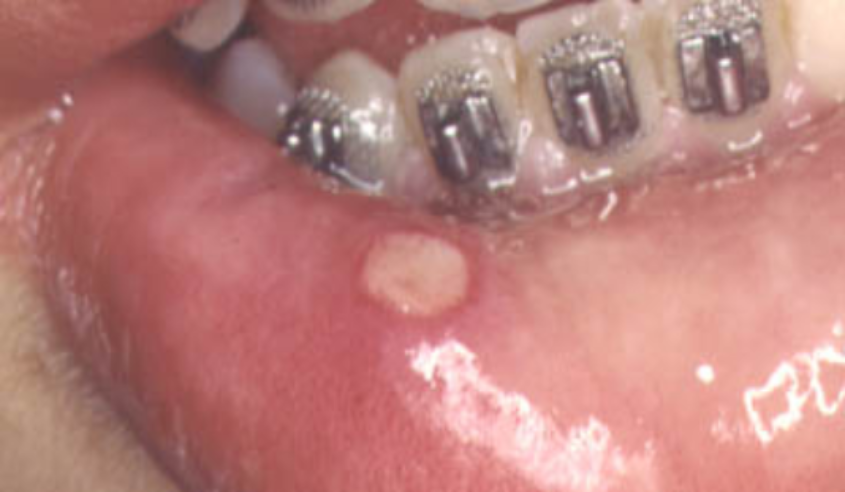
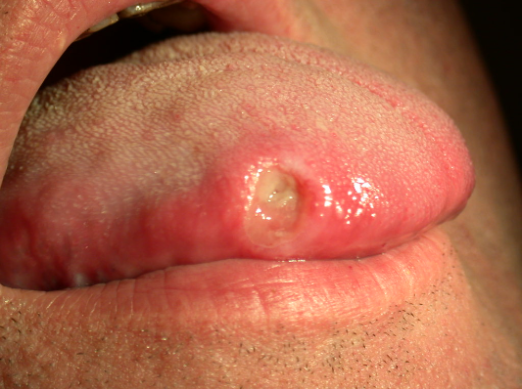
Small ulcers can appear inside the cheeks, on the lips, tongue, gums, and, more rarely, the roof of the mouth.

Most of these ulcers (minor type) are the size of the top of a pencil and can sometimes come in clusters.

Large ulcers (major type) may appear near the tonsils and can be very painful, especially when swallowing.

It is also possible to have up to 100 very small ulcers (herpetiform type). However, these last two types are very rare.

You may get ulcers in other parts of the body, e.g. eyes or genital area. It is important to tell your dentist / doctor about this.

How long do they last for?

The ulcer usually begins with an itchy feeling at the spot where it is due to appear.

After 6 – 24 hours, an ulcer forms and can last 7 – 10 days.

The very large ones can take up to 6 weeks to heal (and often heal by scarring).

What causes mouth ulcers?

Recurrent mouth ulcers cannot be caught by kissing or sharing drinks and utensils, as they are not caused by infection.

They may be an auto-immune disease caused by the body attacking the cells lining the mouth.

It has been suggested that the following factors have a role in causing mouth ulcers:

  • Too little dietary iron or a lack of vitamins, especially B12 and C
  • Bowel disease, such as Crohn’s disease or ulcerative colitis
  • Cœliac disease (gluten sensitivity)
  • Hormonal changes; many women get ulcers at the time of their period
  • Stress Certain foods
Oral Aphthous Ulceration

Should I be worried about my mouth ulcers?

No. Most ulcers heal up on their own.

In order to reduce the discomfort, it is important that you keep your mouth clean at all times. Use a diluted chlorhexidine mouthwash once a day. You can buy this at any chemist.

Sprays, rinses and gels are also available for pain relief.

Consult your dentist / doctor if you think you need additional medication or if the ulcers persist.

What can the Clinician do?

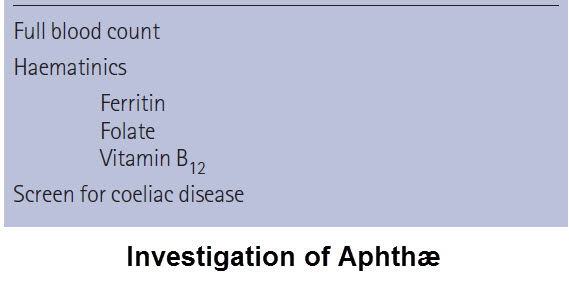
You may have a blood test taken and you will probably be prescribed some form of medication to help the ulcer heal faster and so reduce the pain.

However, these medications cannot stop the ulcers from appearing. Most are steroid-based but are safe to use provided they are not swallowed. It is usually recommended to use them as soon as you feel an ulcer starting.

Other medications may be prescribed, if necessary.
Oral Aphthous Ulceration

How you can treat mouth ulcers yourself

Mouth ulcers need time to heal and there’s no quick fix.

Avoiding things that irritate your mouth ulcer should help:

• speed up the healing process
• reduce pain
• reduce the chance of it returning

Do

• use a soft-bristled toothbrush
• drink cool drinks through a straw
• eat softer foods
• get regular dental check-ups
• eat a healthy, balanced diet

Don’t

• eat very spicy, salty or acidic food
• eat hard, rough, crunchy food, such as toast or crisps or doritos
• drink very hot or acidic drinks, such as fruit juice
• use chewing gum
• use toothpaste containing sodium lauryl sulphate

Pharmacy Medicines:

You can buy several types of mouth ulcer treatment from a pharmacy. Speak to your pharmacist about the best
treatment for you. Options include the following:

• Analgesics (such as paracetamol & ibuprofen)
• Benzocaine lozenges
• Xylocaine 2% gel
• Lidocaine 5% ointment / lozenges or 10% solution spray
• Difflam Mouthwash
• Flurbiprofen lozenges
• Bonjela Dental Gel
• Corsodyl Mouthwash
• Gengigel
• Gelclair
• Orabase
• Combinations: Bonjela Complete Plus & Iglu Rapid Relief Gel

Useful Articles & Websites

Emedicine.com (Dermatology)

Emedicine.com (Ear, Nose & Throat)

Emedicine.com (Pædiatrics)

NHS Choices

Patient.co.uk

NHSinform

NHS

British National Formulary (BNF)

Patient

NICE Clinical Knowledge Scenarios

DermNet NZ

Mayo Clinic

British Medical Journal 2000. ABC of Oral Health. Mouth ulcers and other causes of oro-facial soreness and pain.

BDJ 2005. Nicorandil induced oral ulceration

BDJ 2005. Oral Medicine — Update for the Dental Practitioner. Aphthous and other common ulcers

Oral Biosci Med 2005. Clinical Assessment of Disease Severity in Recurrent Aphthous Stomatitis

BMJ Clinical Evidence 2007. Recurrent Aphthous Ulcers

ENT News 2008. Mouth Ulceration

British Medical Journal 2009. 10-Minute Consultation. Aphthous Ulcers.

Evidence-Based Dentistry 2009. Vitamin B12 for the Treatment of Recurrent Aphthous Stomatitis

BMJ 2010. Evaluation of oral ulceration in primary care

BMJ Best Practice 2014. Mouth Ulcers

BDJ 2014. Content & Quality of Website Information on the Treatment of Oral Ulcers

Dental Update 2015. Clinical Challenges Q&A 11. Ulcers

Dental Update 2015. Clinical Challenges Q&A 13. Painful Lip & Mouth Ulceration

J Int Oral Health 2015. Guideline for the Diagnosis & Treatment of Recurrent Aphthous Stomatitis for Dental Practitioners

BDJ 2016. Statins & Oral Ulceration

Dental Update 2016. Clinical Challenges Q&A 18. Oral Ulceration

Dental Update 2018. Oral Mucosal Ulceration Induced by Alendronic Acid – A Case Series

British Society of Oral Medicine Information Sheet

Guy’s & St Thomas’ Oral Medicine Clinic. Ulcer Severity Score Sheet

  • Cookie Policy
  • Privacy Policy
  • Terms & Conditions
  • Disclaimer
  • Adverts & Sponsors Policy
  • Contact Details

Copyright @ Exodontia - All things Oral Surgery 2026

Website by Hotgrafix

✕
  • Home
  • What is Oral Surgery?
  • Dental Nerve Injuries
  • Wisdom Teeth
    • Wisdom Teeth Removal Guidelines
    • Wisdom Teeth Treatment Options
    • Impaction Classification
    • Indices of Difficulty
  • Oral Surgical Procedures
    • Tooth Removal Warnings
    • What is a Biopsy?
    • Biopsy Warnings
    • Pericoronitis
    • Operculectomy
    • Coronectomy
    • Fraena & Tongue Ties
    • Ectopic & Extra Teeth
    • Exposing & Bonding of Brackets to Teeth
    • Apicectomy Explanation
    • Apicectomy & Retrograde Root Filling (RRF) Warnings
    • Cryotherapy
    • Fractured Maxillary Tuberosity
    • Maxillary Tuberosity Reduction
    • Mouth-Sinus Holes (Oro-Antral Communications)
    • Closure of Mouth-Sinus Holes
    • Buccal Flaps
    • Palatal Flaps
    • Buccal Fat Pad Repair
    • Alveoplasty
    • Removal of Tori
    • Caldwell-Luc / Intra-Oral Antrostomy
  • Post-op Instructions
    • Oro-Antral Regime
    • Post-Op Extraction Instructions
    • Post-op Biopsy Instructions
    • Post-Op Pain Control
  • Bleeding Problems
    • Bleeding Sockets
    • Coagulopathy Post-op Advice
  • Lumps, Bumps & ‘Patches’
    • Drugs for Oral Conditions
    • Amalgam Tattoo
    • Geographic Tongue
    • Black Hairy Tongue
    • Epulides
    • FEP’s & Oral Fibromata
    • Peripheral Ossifying Fibroma
    • Squamous Papilloma
    • Oral Frictional Hyperkeratosis (FK)
    • Oral Mucocœles
    • Oral Candidiasis
    • Denture Stomatitis
    • Median Rhomboid Glossitis
    • Angular Cheilitis
    • Papillary Hyperplasia of the Palate
    • Candidal Leukoplakia
    • Apical Granuloma
    • Parulis
    • Peri-Apical Cysts
    • Dentigerous Cyst
    • Odontogenic Keratocyst (OKC)
    • Solitary Bone Cyst
    • Aneurysmal Bone Cyst
    • Smoker’s Keratosis
    • Oral Aphthous Ulceration
    • Desquamative Gingivitis
    • Plasma Cell Gingivitis
    • Oral Lichen Planus
    • Pemphigus
    • Bullous Pemphigoid
    • Cicatricial Pemphigoid
    • Linear IgA Disease
    • Chronic Ulcerative Stomatitis
    • Drug-Induced Gingival Hyperplasia
    • Necrotising Sialometaplasia
    • Odontomes
    • Exostoses & Tori
    • Dense Bone Islands
    • Oral Blood Blisters
    • Oral & Lingual Tonsils
    • Pre-Malignant Lesions
    • Actinic Cheilitis
    • Oral Sub-Mucous Fibrosis
    • Oral Leukoplakia
    • Oral Cancer
      • Oral Cancer – Ætiological Factors
      • Oral Cancer – Oral Examination
      • Oral Cancer – Oral Screening
      • Oral Cancer – Rapid Referral
      • Oral Cancer – Role of GDP
    • Erythroplakia / Erythroplasia
    • Oral Mucositis
  • Dental Implants
    • Going Abroad for Dental Implants
    • Dental Implant Warnings
  • Oro-Facial Infections
    • Dry Socket
    • Osteomyeltis
    • Cervico-Fascial Infection
  • Mouth & Face Pains
    • Acupuncture
    • Atypical Odontalgia
    • Atypical Facial Pain
    • Burning Mouth Syndrome
    • Trigeminal Neuralgia
    • Post-Herpetic Neuralgia
    • Cranial / Temporal Arteritis
    • Trigeminal Sensory Neuropathy
    • Numb Chin Syndrome
    • Eagle Syndrome
    • Zinc Deficiency
  • Jaw Joint Problems
    • TMJ Arthrocentesis
    • Jaw Dislocation
    • Remedial Jaw Exercises
    • Clicking TMJ Exercises
    • Illustrated TMJ Exercises
    • Self-Care for TMJ Pain
    • Temporalis Tendonitis
    • Tooth Grinding
  • Surgical Dermatology
    • Scars & Their Treatment
    • Steroid Injections Into Scars
    • Seborrhœic Keratosis
    • 5-Fluorouracil, 5-FU, Efudix
    • Post-Op Instructions
  • Bleeding Diatheses & Oral Surgery
    • Coagulopathies & Oral Surgery
    • Warfarin & Oral Surgery
    • Anti-Thrombotics & Oral Surgery
    • NOAC’s & Oral Surgery
    • Platelet Disorders & Deficiencies
    • Hæmophilia & Oral Surgery
    • Rare Clotting Factor Deficiencies
    • Hæmatological Disorders
    • Dialysis & Oral Surgery
  • Salivary Gland Disorders
    • Dry Mouth & Xerostomia
    • Sjögren’s Syndrome
    • Minor Salivary Gland Biopsy (for Sjögren’s Syndrome Diagnosis)
    • Parotid Gland Removal / Superficial Parotidectomy
    • Submandibular Gland Removal
    • Sublingual Gland Removal
    • Ranulas / Ranulæ & Their Treatment
    • Sialosis / Sialadenosis
    • Frey’s Syndrome / Gustatory Sweating
    • Salivary Stone Release
    • Taste Disturbances
  • Dental & Facial Trauma
    • Dental Emergencies & Trauma
    • Facial Trauma
    • Fractures of the Mandible / Lower Jaw
    • Fractures of the Cheek Bone / Zygomatic Complex
    • Archbars & Buttons Removal
  • Oral Surgery & Pregnancy
  • Local Anaesthetic Allergy & Testing
  • Find A Dentist
  • Find An Endodontist
  • Membership & Links
  • Bibliography
  • Biography