
Fractures of the Mandible / Lower Jaw
The problem
Your lower jaw has been broken.
The number of fractures, where they have occurred and whether they need treatment to help them heal has already been established by the doctor who examined you.
What does the operation involve?
The treatment involves a general anæsthetic, which means you are going to be put to sleep completely.
Once you are asleep, we will make a cut on the inside of your mouth through the gum.
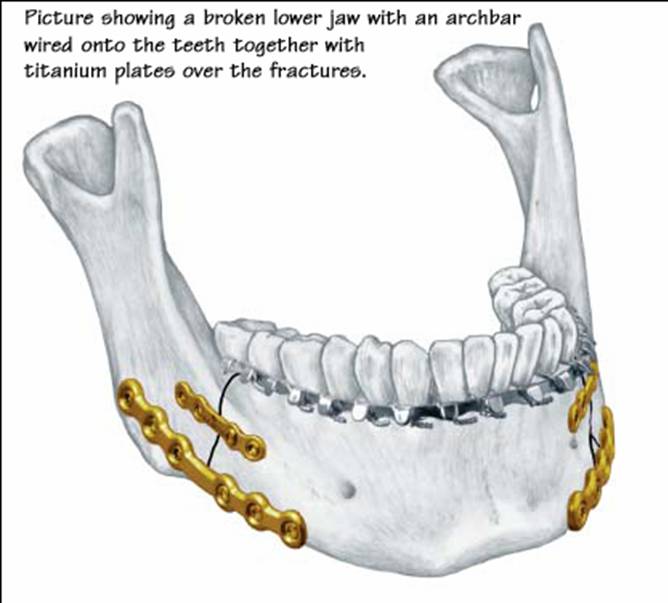
The broken bones are then put back together and held in place with small metal plates and screws.
The gum is stitched back into place with dissolvable stitches, which can take a fortnight or even longer to fall out. Sometimes, it is necessary to place wires, metal braces or orthodontic brackets around / on your teeth so that elastic bands can be attached to them. Screws inserted into the jawbone above the teeth are occasionally used instead of these wires or metal braces.
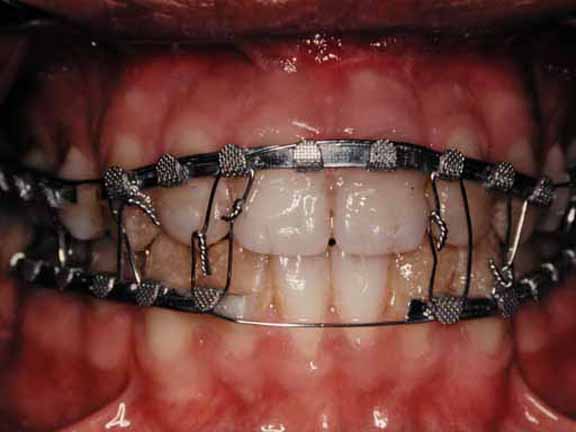
Any elastic bands are not usually attached until the day after your operation, which means that your jaws will be able to move freely when you wake up from surgery. The bands will guide your bite into the correct position after surgery.
Will anything else be done while I am asleep?
Occasionally, it is necessary to remove damaged or decayed teeth at the site of the fracture. In very difficult fractures, it is sometimes necessary to make a cut on the outside of the mouth through the skin. If this is going to take place, the site and size of the cut will be discussed with you before you sign any consent form for your operation.
What can I expect after the operation?
- It is likely to be sore and regular painkillers will be given to you by the hospital doctor. The discomfort is usually worse for the first few days although it may take a couple of weeks to completely disappear.
- You will also be given antibiotics through a vein in your arm whilst you are in hospital to fight infection.
- You will be sent home with painkillers and a course of antibiotics.
- You usually stay in hospital for one night following the surgery. The following day, the position of your fractures will be checked with X-rays before you are allowed home.
- Although the plates and screws hold the fractures in place it still takes around six weeks for your lower jaw to heal completely. During this time, you need to eat a relatively soft diet. This will be discussed with you by the doctors, nurses and dieticians.
- It is also important that you keep your mouth as clean as possible for the first few weeks after surgery to prevent infection. It may be difficult to clean your teeth around stitches because it is sore. It is best to keep the area free from food debris by gently rinsing your mouth with a mouthwash or warm salt water (dissolve a flat teaspoon of kitchen salt in a cup of warm water) starting on the day after surgery.
- If any wires, metal braces or screws are used to help guide your bite into the correct position, they will be removed in the OMFS Outpatient Department when your doctors are happy that your fracture has healed (this tends to be 4 – 6 weeks after the operation).

Do I need to take any time off work?
Depending on the nature of your work you may need to take a fortnight or so off work. Avoid strenuous exercise for this time. It is important to remember that you should not drive or operate machinery for 48 hours after your general anaesthetic.
What are the possible problems?
- Infections are uncommon because of the antibiotics that are used.
- Bleeding from the cuts inside your mouth is unlikely to be a problem. However, should the area bleed when you get home apply pressure over the site for at least 10 minutes with a rolled up handkerchief or swab.
- Numbness of the Lower Lip & Tongue. The Inferior Dental Nerve that runs through the centre of the lower jaw that supplies feeling to your lower lip, chin and the lower teeth. This nerve may have been bruised at the time of the fracture and as a result you might already feel some tingling or numbness in your lip and / or chin.
This tingling may also be caused/made worse by surgery. In the majority of people, the numbness gets better on its own although it can take several months to do so (this usually lasts about 6 – 12 months, but may be permanent).
The Lingual Nerve is on each side of the inside of the mandible (lower jaw). This nerve passes very close to the tongue side of the fracture. It gives feeling and taste to that side of the tongue. This nerve may have been damaged in the injury. Due to the closeness of this nerve to the area of surgery, there is a small possibility of some damage to the nerve. Damage to this nerve causes that side of the tongue to go numb. More rarely, it may cause irritating sensations as well as loss of taste on that side of the tongue. Although this effect is usually temporary (6 – 12 months) it may be permanent.
- Damage to Teeth in Fracture Zone. Occasionally, teeth next to the fracture site may be damaged by screws that are used to hold the titanium plates in place or to bring the jaws together with wires. As a consequence, these teeth may die and require dental treatment to keep them.
- Plate Removal. If it has been necessary to put any plates or screws in your jaw to hold it in position, these are not normally removed unless they get infected because they tend not to cause problems. The metal that is used is titanium which does not set off metal detectors in airports etc.
- Delayed Union of the fractured jaw bone occur in approximately 3% of fractures. Delayed union is a temporary condition in which adequate reduction of the broken jaw and limitation of movement of the broken jaw eventually produces bony union (that is, it heals).
- Mal-Alignment / Mal-Union. In a few cases, the fracture may not heal after repair and further operations may be needed. The fracture may not be able to be precisely put back together. This may result in some change in the bite. Not all mal-unions are clinically significant.
- Non-Union. Sometimes, the fracture just doesn’t heal. This can often be due to infection or impaired healing due to the patient’s medical condition. This may need further surgery to correct the non-union of the fracture.
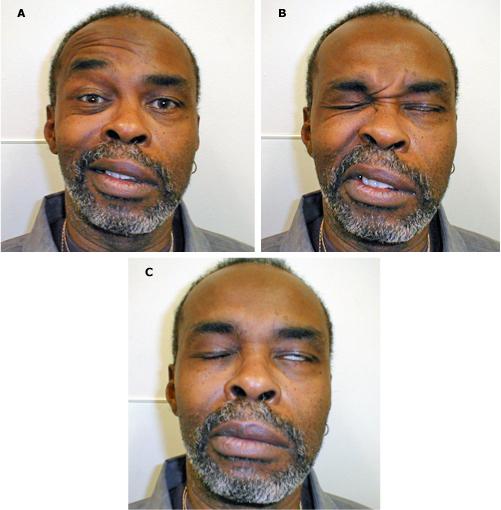
- Facial Weakness. Sometimes, in order to get good access to repair the broken jaw, we have to go through the cheek. The nerve making the facial muscles move (the Facial Nerve) may be traumatised as a result. This can lead to a drooping at the side of the mouth. This improves with time. Also, there may be some scarring at this site. This will be small and not particularly noticeable.
- Limitation of Mouth Opening. This should improve with time. However, to begin with, you may find you have to stick to a soft / liquidised diet.
- Need for “Fine Tuning” of the Bite. Even though we will try to restore the way you bite together to its original state, there is sometimes the need to “fine tune” the way you bite together. This involves grinding spots on the biting surface of the teeth.
- Removal of archbars / Leonard buttons / IMF screws. If these have been used, they are removed after approximately 4 – 6 weeks.
Will I need further appointments?
A review appointment will be arranged before you leave hospital. We will keep a close eye on you for several months following treatment to make sure that your jaw heals uneventfully.