Exodontia.info
Menu
Exodontia.info
✕
info@exodontia.info

Dense Bone Islands

Dense Bone Islands (DBI’s) are also known as enostoses or idiopathic osteosclerosis, bone scar, focal osteosclerosis and peri-apical osteopetrosis.

Dense Bone Islands
Dense Bone Islands
Dense Bone Islands
Dense Bone Islands
Dense Bone Islands
Dense Bone Islands

What are Dense Bone Islands (DBI’s)?

Dense Bone Islands are synonymous with enostoses or idiopathic osteosclerosis, bone scar, focal osteo-sclerosis and peri-apical osteo-petrosis.

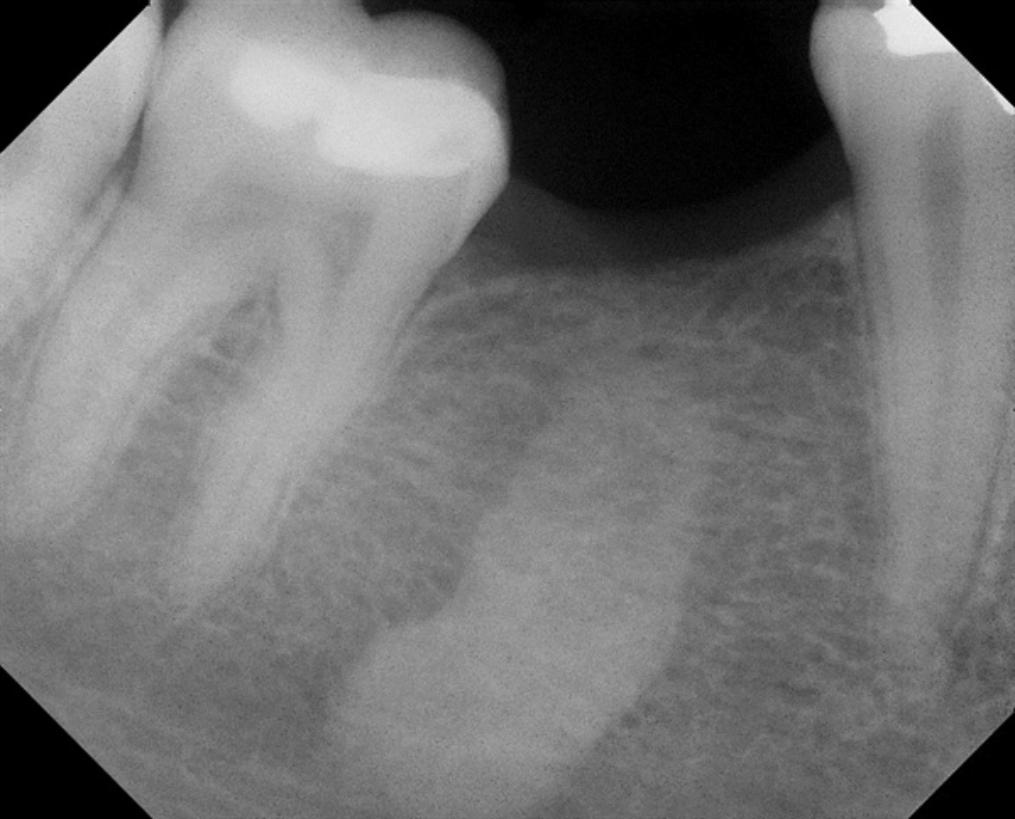
Dense Bone Islands (DBI’s) present as areas of increased osseous (bone) defined borders, located at or around the apical regions (root tips) of teeth, inter-radicular area or with no apparent connection to the teeth.

DBI’s typically manifest as an incidentally discovered, well-defined homogenous radio-opacity that is of unknown cause and cannot be attributed to any inflammatory, dysplastic, neoplasia or systemic disorder. Focal internal growth of bone commonly seen in the premolar-molar region of the mandible.

They are the internal counterparts of exostoses. These are localised growth of compact bone that extends from the inner surface of cortical bone into cancellous bone. It represents a focus of mature compact (cortical) bone within the cancellous bone (spongiosa).

It is also called a “whorl”. A rare condition in which thousands of DBI’s scattered through the skeleton is known as osteopoikile or osteopoikilosis.

What are the signs & symptoms (+ demographics)?

DBI’s can arise at any age. The number of DBI’s is found to be significantly higher in the 2nd decades and 3rd decades in life (10 – 19 and 20 – 29 years) than in other periods.

The effect on adjacent teeth may include indistinct lamina dura and periodontal ligament space and root resorption. The associated teeth are usually asymptomatic. DBI’s do not cause osseous expansion; hence, these do not affect the fit of dentures.

In some cases, it inhibits the eruption of normal teeth. Tooth is vital in affected area.

In rare cases, it may cause external resorption (due to pressure) when it is located peri-apical to the tooth.

No change in size or any malignant potential.

What are the causes of Dense Bone Islands (DBI’s)?

Unknown ætiology but may be considered a normal developmental anatomic bone variation.

How are they diagnosed?

DBI’s are usually found on routine radiographic investigations.

These lesions are ‘cold’ on scintigraphy scans.

Single isolated radio-opacities that may be well defined or diffuse so that the trabeculæ blend with the trabecular pattern of adjacent normal jaw bone. It is more or less rounded with size varying from a few millimetres up to a centimetre or more.

The shape of the DBI is classified as either round or irregular.

The location of the lesion is classified as mandibular or maxillary firstly, then further by region of the jaw: Incisive, canine, canine-premolar, pre-molar, pre-molar-molar or molar.

How are they treated?

Once, the condition is diagnosed, treatment is neither indicated nor necessary.

Differential Diagnosis:

Benign cemento-osseous lesions and inflammatory lesions such as apical sclerosing or condensing osteitis.

• Peri-Apical Idiopathic Osteo-Sclerosis (periodontal ligament widening)
• Peri-Apical Cemental Dysplasia (radio-lucent margin; vital teeth; separated from surrounding bone by a radio-
lucent border or rim of varying thickness)
• Hyper-cementosis (integral part of formed root; within intact lamina dura & periodontal space; vital tooth)
• Cemento-blastoma (associated with root of teeth; vital & painful)
• Osteo-sarcoma
• Metastatic osteo-blastic carcinoma
• Chondro-sarcoma (radio-lucent component present)

Useful Articles & Websites

Wikipedia.org

Radiopaedia.org

Dr G’s Toothpix

Oral Surg Oral Med Oral Pathol Oral Radiol Endod 2005. Radiologic Diagnosis of Enostosis in the Mandible

Oral & Implantology 2008. Dense Bone Island of the Jaw – A Case Report

J Massachusetts Dent Soc 2010. Incidental Dental Radiographic Findings – Dense Bone Islands

J Oral Sci 2011. Asymptomatic Radiopaque Lesions of the Jaws – A Radiographic Study using Cone-Beam Computed Tomography

J Cranio-Maxillary Dis 2013. Bone Islands of the Craniomaxillofacial Region

  • Cookie Policy
  • Privacy Policy
  • Terms & Conditions
  • Disclaimer
  • Adverts & Sponsors Policy
  • Contact Details

Copyright @ Exodontia - All things Oral Surgery 2026

Website by Hotgrafix

✕
  • Home
  • What is Oral Surgery?
  • Dental Nerve Injuries
  • Wisdom Teeth
    • Wisdom Teeth Removal Guidelines
    • Wisdom Teeth Treatment Options
    • Impaction Classification
    • Indices of Difficulty
  • Oral Surgical Procedures
    • Tooth Removal Warnings
    • What is a Biopsy?
    • Biopsy Warnings
    • Pericoronitis
    • Operculectomy
    • Coronectomy
    • Fraena & Tongue Ties
    • Ectopic & Extra Teeth
    • Exposing & Bonding of Brackets to Teeth
    • Apicectomy Explanation
    • Apicectomy & Retrograde Root Filling (RRF) Warnings
    • Cryotherapy
    • Fractured Maxillary Tuberosity
    • Maxillary Tuberosity Reduction
    • Mouth-Sinus Holes (Oro-Antral Communications)
    • Closure of Mouth-Sinus Holes
    • Buccal Flaps
    • Palatal Flaps
    • Buccal Fat Pad Repair
    • Alveoplasty
    • Removal of Tori
    • Caldwell-Luc / Intra-Oral Antrostomy
  • Post-op Instructions
    • Oro-Antral Regime
    • Post-Op Extraction Instructions
    • Post-op Biopsy Instructions
    • Post-Op Pain Control
  • Bleeding Problems
    • Bleeding Sockets
    • Coagulopathy Post-op Advice
  • Lumps, Bumps & ‘Patches’
    • Drugs for Oral Conditions
    • Amalgam Tattoo
    • Geographic Tongue
    • Black Hairy Tongue
    • Epulides
    • FEP’s & Oral Fibromata
    • Peripheral Ossifying Fibroma
    • Squamous Papilloma
    • Oral Frictional Hyperkeratosis (FK)
    • Oral Mucocœles
    • Oral Candidiasis
    • Denture Stomatitis
    • Median Rhomboid Glossitis
    • Angular Cheilitis
    • Papillary Hyperplasia of the Palate
    • Candidal Leukoplakia
    • Apical Granuloma
    • Parulis
    • Peri-Apical Cysts
    • Dentigerous Cyst
    • Odontogenic Keratocyst (OKC)
    • Solitary Bone Cyst
    • Aneurysmal Bone Cyst
    • Smoker’s Keratosis
    • Oral Aphthous Ulceration
    • Desquamative Gingivitis
    • Plasma Cell Gingivitis
    • Oral Lichen Planus
    • Pemphigus
    • Bullous Pemphigoid
    • Cicatricial Pemphigoid
    • Linear IgA Disease
    • Chronic Ulcerative Stomatitis
    • Drug-Induced Gingival Hyperplasia
    • Necrotising Sialometaplasia
    • Odontomes
    • Exostoses & Tori
    • Dense Bone Islands
    • Oral Blood Blisters
    • Oral & Lingual Tonsils
    • Pre-Malignant Lesions
    • Actinic Cheilitis
    • Oral Sub-Mucous Fibrosis
    • Oral Leukoplakia
    • Oral Cancer
      • Oral Cancer – Ætiological Factors
      • Oral Cancer – Oral Examination
      • Oral Cancer – Oral Screening
      • Oral Cancer – Rapid Referral
      • Oral Cancer – Role of GDP
    • Erythroplakia / Erythroplasia
    • Oral Mucositis
  • Dental Implants
    • Going Abroad for Dental Implants
    • Dental Implant Warnings
  • Oro-Facial Infections
    • Dry Socket
    • Osteomyeltis
    • Cervico-Fascial Infection
  • Mouth & Face Pains
    • Acupuncture
    • Atypical Odontalgia
    • Atypical Facial Pain
    • Burning Mouth Syndrome
    • Trigeminal Neuralgia
    • Post-Herpetic Neuralgia
    • Cranial / Temporal Arteritis
    • Trigeminal Sensory Neuropathy
    • Numb Chin Syndrome
    • Eagle Syndrome
    • Zinc Deficiency
  • Jaw Joint Problems
    • TMJ Arthrocentesis
    • Jaw Dislocation
    • Remedial Jaw Exercises
    • Clicking TMJ Exercises
    • Illustrated TMJ Exercises
    • Self-Care for TMJ Pain
    • Temporalis Tendonitis
    • Tooth Grinding
  • Surgical Dermatology
    • Scars & Their Treatment
    • Steroid Injections Into Scars
    • Seborrhœic Keratosis
    • 5-Fluorouracil, 5-FU, Efudix
    • Post-Op Instructions
  • Bleeding Diatheses & Oral Surgery
    • Coagulopathies & Oral Surgery
    • Warfarin & Oral Surgery
    • Anti-Thrombotics & Oral Surgery
    • NOAC’s & Oral Surgery
    • Platelet Disorders & Deficiencies
    • Hæmophilia & Oral Surgery
    • Rare Clotting Factor Deficiencies
    • Hæmatological Disorders
    • Dialysis & Oral Surgery
  • Salivary Gland Disorders
    • Dry Mouth & Xerostomia
    • Sjögren’s Syndrome
    • Minor Salivary Gland Biopsy (for Sjögren’s Syndrome Diagnosis)
    • Parotid Gland Removal / Superficial Parotidectomy
    • Submandibular Gland Removal
    • Sublingual Gland Removal
    • Ranulas / Ranulæ & Their Treatment
    • Sialosis / Sialadenosis
    • Frey’s Syndrome / Gustatory Sweating
    • Salivary Stone Release
    • Taste Disturbances
  • Dental & Facial Trauma
    • Dental Emergencies & Trauma
    • Facial Trauma
    • Fractures of the Mandible / Lower Jaw
    • Fractures of the Cheek Bone / Zygomatic Complex
    • Archbars & Buttons Removal
  • Oral Surgery & Pregnancy
  • Local Anaesthetic Allergy & Testing
  • Find A Dentist
  • Find An Endodontist
  • Membership & Links
  • Bibliography
  • Biography