Exodontia.info
Menu
Exodontia.info
✕
info@exodontia.info

Oral Cancer – Ætiological Factors

More than 90% of Oral Cancer is Oral Squamous Cell Carcinoma (OSCC).

OSCC accounts for approx 2 – 4% of all cancers in the UK but is one of the most common cancers on the Indian subcontinent.

Men are more frequently affected than women; most OSCC patients > 40 and the incidence of rises rapidly with age.

The lower lip is the most common site & related to actinic (sun / solar) damage.

The tongue (the sides especially further back [postero-laterally]), is the most common site within the mouth.

Heavy tobacco smoking & alcohol consumption tend to be associated with the development of OSCC; in India & SE Asia, betel & areca nut chewing may be more important.

The majority of OSCC involves the lateral border of tongue ± Floor of Mouth. Why are these sites predisposed to tumour development? Perhaps carcinogens pool in saliva in the so called ‘graveyard’ or ‘coffin’ area and there is increased permeability to these chemicals in these areas.

Ætiological Factors for Oral Cancer

Carcinogens

  • Tobacco
  • Alcohol
  • Areca nut / betel

Sunlight (lip only)

Infections

  • Syphilis (Syphilitic leukoplakia)
  • Candidiasis (Candidal leukoplakia)
  • Viruses (HPV)

Mucosal Diseases

  • Dysplastic lesions
  • Oral Lichen Plamus
  • Oral Sub-Mucous Fibrosis

Genetic Disorders

  • Dyskeratosis congenita
  • Fanconi’s anæmia
Tobacco
Tobacco
Alcohol
Alcohol
Areca Nut / Betel
Areca Nut / Betel
Oral Cancer – Ætiological Factors

Syphilis (Syphilitic Leukoplakia / Glossitis)

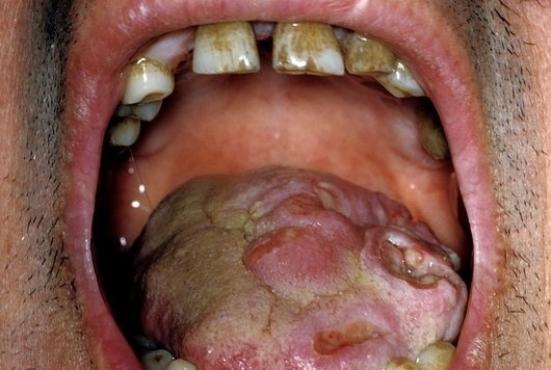
Syphilitic leukoplakia, especially of the tongue dorsum is a feature of tertiary syphilis (rarely seen now) but the malignant potential is high.

Carcinoma developing near the centre of the tongue dorsum is typically the sequel to syphilitic leukoplakia. Given the decline in late-stage syphilis, it is exceedingly rare in this site now.

Candida (Candidal Leukplakia)

leukoplakias especially at the commissures.

It may be associated with an increased risk of malignant change.

Candidal Leukoplakia responds well to anti-fungals & the cessation of smoking. The tongue dorsum is also a common site.
Oral Cancer – Ætiological Factors

Human Papilloma Virus 16 (HPV 16)

HPV related cancers appear to occur on the tonsillar area, the base of the tongue and the oro-pharynx (non-HPV positive tumours tend to involve the anterior tongue, floor of the mouth, the mucosa that covers the inside of the cheeks and alveolar ridges).

In general, it appears that HPV-positive tumours occur most frequently in a younger group of individuals than tobacco-related malignancies. They occur more in white males and in non-smokers. The HPV-positive group is the fastest growing segment of the oral cancer population.

It does not appear that the HPV 16 acts synergistically with tobacco or alcohol and represents a completely unique disease process.

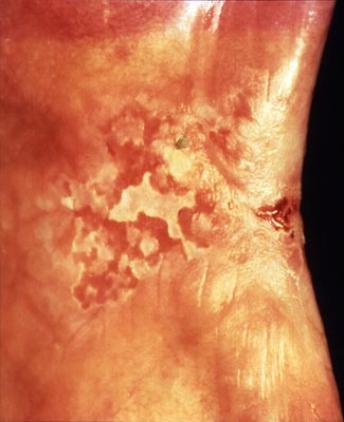
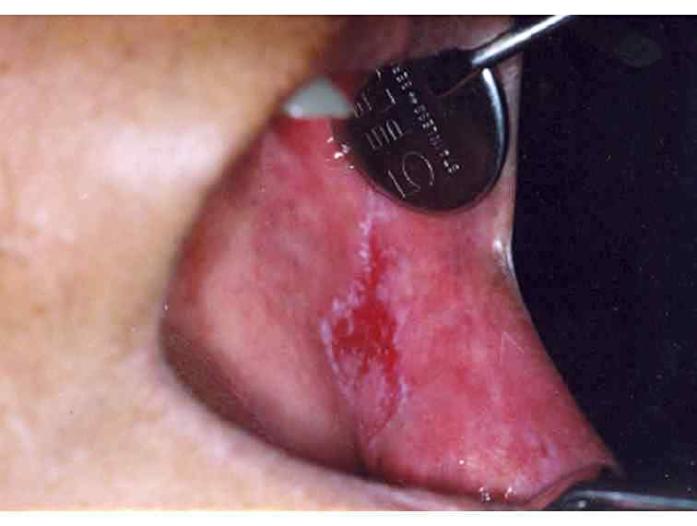
Oral Lichen Planus

It is estimated that 1 – 4% of patients develop carcinomata after a decade. Plaque-like & erosive OLP in unusual sites (such as the fauces & tongue) should be regarded with suspicion.

In view of the commonplaceness of OLP, its importance as a pre-malignant lesion may be considerable.

Cutaneous LP appears to carry no risk of malignant change.
Oral Cancer – Ætiological Factors

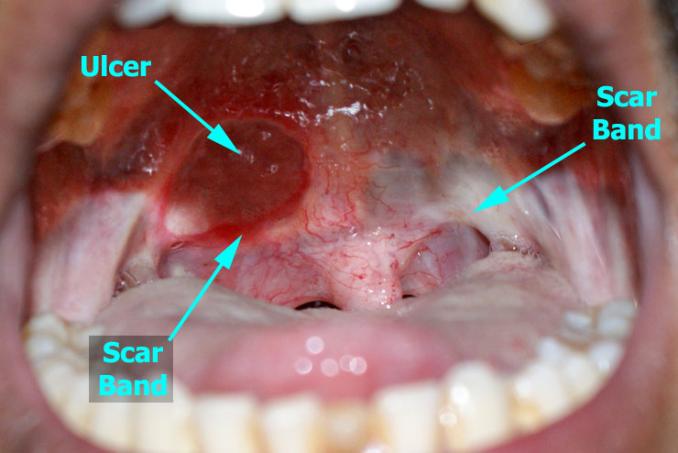
SMF affects those from the Indian sub-continent & SE sclerosis but limited to the oral tissues & without the immune abnormalities.

Arecoline, a stimulant derive from the areca nut is thought to induce fibroblast proliferation & collagen synthesis.

Clinically, there is symmetrical fibrosis (scarring) of the buccal mucosæ, soft palate & the inner aspects of lips.

The overlying mucosa may be normal or there may be a vesiculating stomatitis. Fibrosis & ishæmia causes extreme pallor of the affected area which becomes so hard that it can’t be indented by your finger.

Progressive trismus making it very difficult to eat / drink. Malignant change is from 4.5 – 8 %.

Oral Cancer – Ætiological Factors
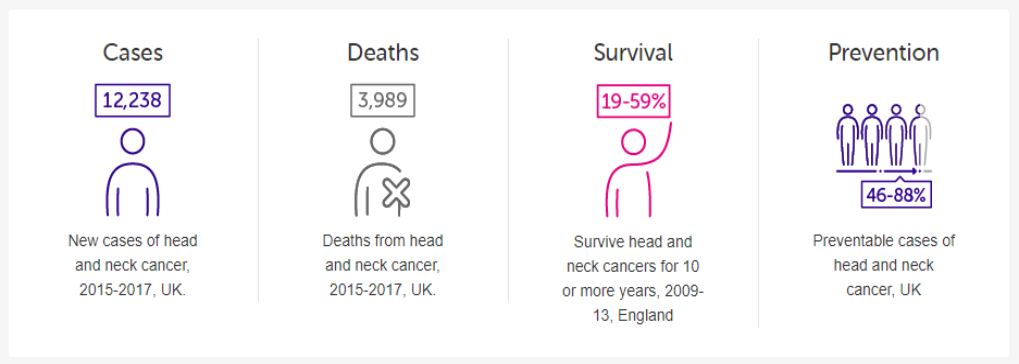
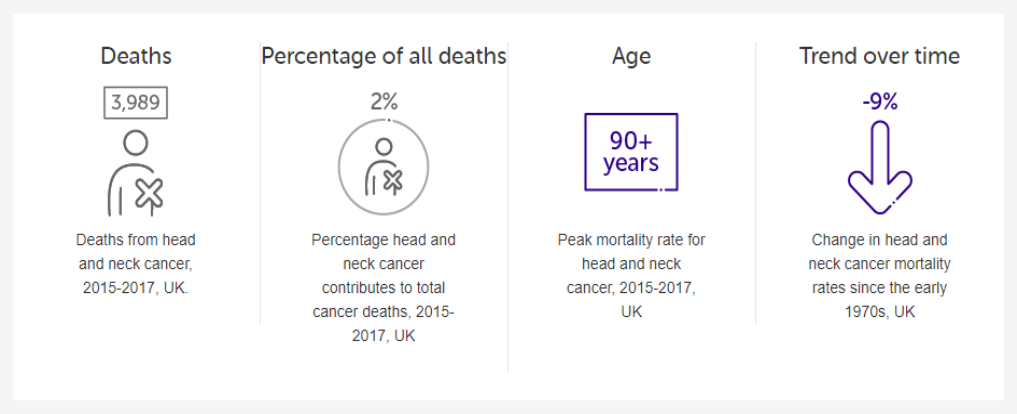
National Statistics for Head & Neck Cancer in the UK, 2015 - 2017
National Statistics for Head & Neck Cancer in the UK, 2015 – 2017
Oral Cancer – Ætiological Factors

Useful Articles & Websites

Dental Protection. Risk Management Module. Oral Cancer.

Dental Update 2000. An Overview of the Prevention of Oral Cancer and Diagnostic Markers of Malignant Change. 1. Prevention

Dental Update 2000. An Overview of the Prevention of Oral Cancer and Diagnostic Markers of Malignant Change. 2. Markers of Value in Tumour Diagnosis

Preventive Dentistry 2006. Oral Cancer – A Growing Concern.

Oral Oncology 2008. Oral cancer prevention and control – The approach of the World Health Organization.

Oral Oncology 2009. Review. Global epidemiology of oral and oro-pharyngeal cancer.

BMJ 2010. Head & Neck cancer – Part 1. Epidemiology, presentation & prevention.

JADA 2011. Rise in Oral Cancer Linked to HPV, Study Shows

JADA 2011. The Connection between HPV & Oroparyngeal Squamous Cell Carcinomas in the US. Implications for Dentistry

BDJ 2013. HPV linked to a third of throat cancer cases

BDJ 2013. Letters to the Editor. Tongue Cancer Subgroup

Dent Update 2015. Mouth Cancer for Clinicians Part 3. Risk Factors (Traditional – Tobacco)

Dent Update 2015. Mouth Cancer for Clinicians Part 4. Risk Factors (Traditional – Alcohol, Betel & Others)

Dent Update 2015. Mouth Cancer for Clinicians Part 5. Risk Factors (Other)

BDJ 2018. Oral Cancer & Tobacco – Developments in Harm Reduction

BDJ 2018. The Changing Epidemiology of Oral Cancer – Definitions, Trends & Risk Factors

Dental Update 2020. Mouth Cancer − Risk Factors & Potentially Malignant Disorders

  • Cookie Policy
  • Privacy Policy
  • Terms & Conditions
  • Disclaimer
  • Adverts & Sponsors Policy
  • Contact Details

Copyright @ Exodontia - All things Oral Surgery 2026

Website by Hotgrafix

✕
  • Home
  • What is Oral Surgery?
  • Dental Nerve Injuries
  • Wisdom Teeth
    • Wisdom Teeth Removal Guidelines
    • Wisdom Teeth Treatment Options
    • Impaction Classification
    • Indices of Difficulty
  • Oral Surgical Procedures
    • Tooth Removal Warnings
    • What is a Biopsy?
    • Biopsy Warnings
    • Pericoronitis
    • Operculectomy
    • Coronectomy
    • Fraena & Tongue Ties
    • Ectopic & Extra Teeth
    • Exposing & Bonding of Brackets to Teeth
    • Apicectomy Explanation
    • Apicectomy & Retrograde Root Filling (RRF) Warnings
    • Cryotherapy
    • Fractured Maxillary Tuberosity
    • Maxillary Tuberosity Reduction
    • Mouth-Sinus Holes (Oro-Antral Communications)
    • Closure of Mouth-Sinus Holes
    • Buccal Flaps
    • Palatal Flaps
    • Buccal Fat Pad Repair
    • Alveoplasty
    • Removal of Tori
    • Caldwell-Luc / Intra-Oral Antrostomy
  • Post-op Instructions
    • Oro-Antral Regime
    • Post-Op Extraction Instructions
    • Post-op Biopsy Instructions
    • Post-Op Pain Control
  • Bleeding Problems
    • Bleeding Sockets
    • Coagulopathy Post-op Advice
  • Lumps, Bumps & ‘Patches’
    • Drugs for Oral Conditions
    • Amalgam Tattoo
    • Geographic Tongue
    • Black Hairy Tongue
    • Epulides
    • FEP’s & Oral Fibromata
    • Peripheral Ossifying Fibroma
    • Squamous Papilloma
    • Oral Frictional Hyperkeratosis (FK)
    • Oral Mucocœles
    • Oral Candidiasis
    • Denture Stomatitis
    • Median Rhomboid Glossitis
    • Angular Cheilitis
    • Papillary Hyperplasia of the Palate
    • Candidal Leukoplakia
    • Apical Granuloma
    • Parulis
    • Peri-Apical Cysts
    • Dentigerous Cyst
    • Odontogenic Keratocyst (OKC)
    • Solitary Bone Cyst
    • Aneurysmal Bone Cyst
    • Smoker’s Keratosis
    • Oral Aphthous Ulceration
    • Desquamative Gingivitis
    • Plasma Cell Gingivitis
    • Oral Lichen Planus
    • Pemphigus
    • Bullous Pemphigoid
    • Cicatricial Pemphigoid
    • Linear IgA Disease
    • Chronic Ulcerative Stomatitis
    • Drug-Induced Gingival Hyperplasia
    • Necrotising Sialometaplasia
    • Odontomes
    • Exostoses & Tori
    • Dense Bone Islands
    • Oral Blood Blisters
    • Oral & Lingual Tonsils
    • Pre-Malignant Lesions
    • Actinic Cheilitis
    • Oral Sub-Mucous Fibrosis
    • Oral Leukoplakia
    • Oral Cancer
      • Oral Cancer – Ætiological Factors
      • Oral Cancer – Oral Examination
      • Oral Cancer – Oral Screening
      • Oral Cancer – Rapid Referral
      • Oral Cancer – Role of GDP
    • Erythroplakia / Erythroplasia
    • Oral Mucositis
  • Dental Implants
    • Going Abroad for Dental Implants
    • Dental Implant Warnings
  • Oro-Facial Infections
    • Dry Socket
    • Osteomyeltis
    • Cervico-Fascial Infection
  • Mouth & Face Pains
    • Acupuncture
    • Atypical Odontalgia
    • Atypical Facial Pain
    • Burning Mouth Syndrome
    • Trigeminal Neuralgia
    • Post-Herpetic Neuralgia
    • Cranial / Temporal Arteritis
    • Trigeminal Sensory Neuropathy
    • Numb Chin Syndrome
    • Eagle Syndrome
    • Zinc Deficiency
  • Jaw Joint Problems
    • TMJ Arthrocentesis
    • Jaw Dislocation
    • Remedial Jaw Exercises
    • Clicking TMJ Exercises
    • Illustrated TMJ Exercises
    • Self-Care for TMJ Pain
    • Temporalis Tendonitis
    • Tooth Grinding
  • Surgical Dermatology
    • Scars & Their Treatment
    • Steroid Injections Into Scars
    • Seborrhœic Keratosis
    • 5-Fluorouracil, 5-FU, Efudix
    • Post-Op Instructions
  • Bleeding Diatheses & Oral Surgery
    • Coagulopathies & Oral Surgery
    • Warfarin & Oral Surgery
    • Anti-Thrombotics & Oral Surgery
    • NOAC’s & Oral Surgery
    • Platelet Disorders & Deficiencies
    • Hæmophilia & Oral Surgery
    • Rare Clotting Factor Deficiencies
    • Hæmatological Disorders
    • Dialysis & Oral Surgery
  • Salivary Gland Disorders
    • Dry Mouth & Xerostomia
    • Sjögren’s Syndrome
    • Minor Salivary Gland Biopsy (for Sjögren’s Syndrome Diagnosis)
    • Parotid Gland Removal / Superficial Parotidectomy
    • Submandibular Gland Removal
    • Sublingual Gland Removal
    • Ranulas / Ranulæ & Their Treatment
    • Sialosis / Sialadenosis
    • Frey’s Syndrome / Gustatory Sweating
    • Salivary Stone Release
    • Taste Disturbances
  • Dental & Facial Trauma
    • Dental Emergencies & Trauma
    • Facial Trauma
    • Fractures of the Mandible / Lower Jaw
    • Fractures of the Cheek Bone / Zygomatic Complex
    • Archbars & Buttons Removal
  • Oral Surgery & Pregnancy
  • Local Anaesthetic Allergy & Testing
  • Find A Dentist
  • Find An Endodontist
  • Membership & Links
  • Bibliography
  • Biography